Iran’s Drone, Russia’s Problem: The Shahed 136 and Moscow’s Military Weakness
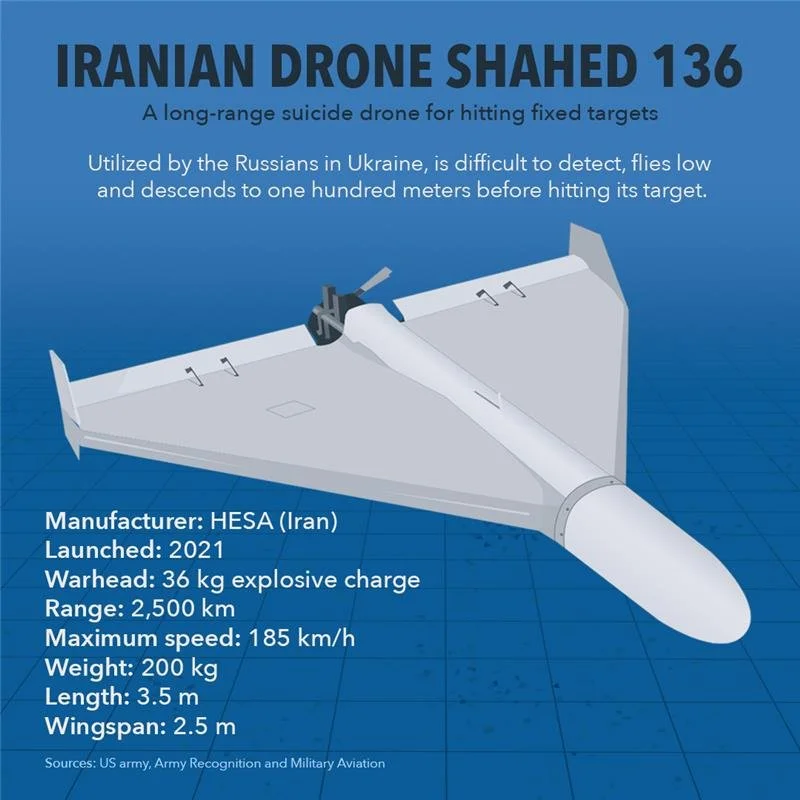
Russia’s “Special Military Operation” is slowly approaching its fourth year. What appeared to be a quick victory has slowly devolved into a war of attrition, with both Ukraine and Russia suffering significant casualties for incremental gains. Drones made a significant impact on the battlefield, from Ukrainian quadcopters annihilating tanks to Bayraktar suicide drones slamming into Russian oil fields. Russia’s response is to launch a Geran 2, commonly known as a Shahed 136, towards crowded Ukrainian civilians and cause mass casualties. However, the utilization of these drones reveals a significant problem in Russia’s strategy to annex Ukraine. This article will examine the development of the Shahed 136, its capabilities (using only open source information), and what the deployment of these drones reveals about Russia’s weakness.
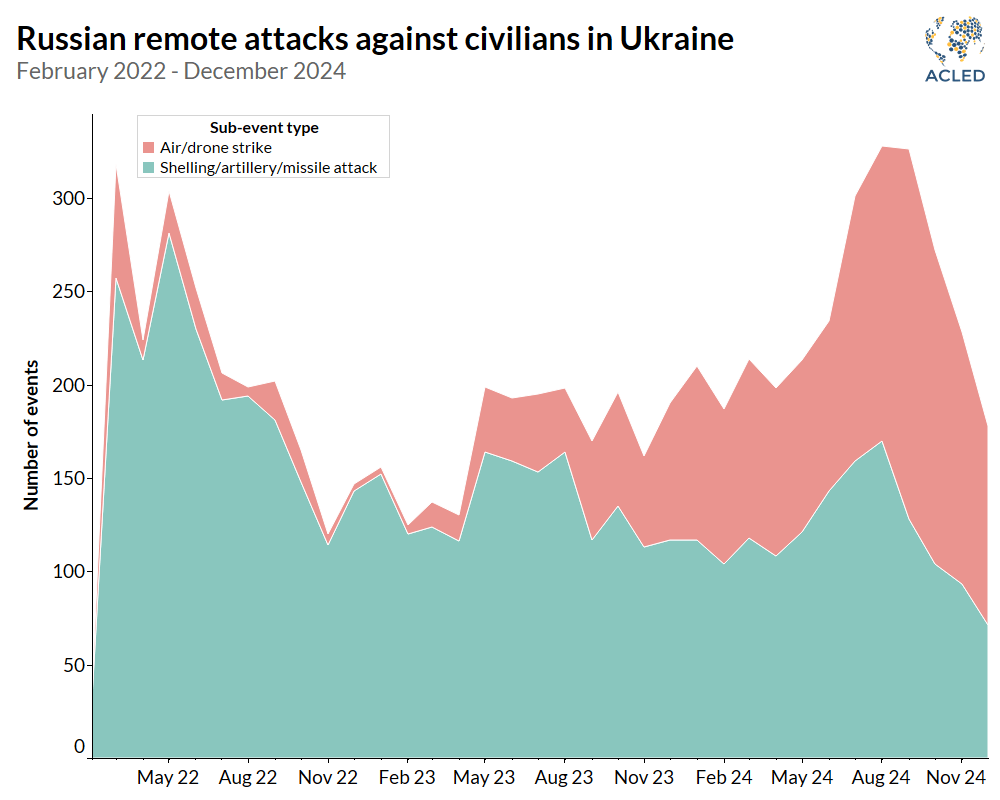
Graph depicting Russian attacks against Civilians | ACLE
Following the Islamic revolution, Western countries sanctioned the Iranian regime, which crippled its conventional military forces. When the Iran-Iraq war started, it put Iran in a difficult position. It could not afford to risk aircraft flying over hostile airspace, because Iran would not be able to replace any broken or damaged parts. Iraq, with the backing of Western and Arab states, possessed better equipment capable of higher-performing aircraft and air defenses. While aircraft can provide offensive capabilities, allowing infantry to advance, a major benefit is aerial reconnaissance. By providing ground forces and aerial views of enemy positions, it can allow military commanders to make better-informed decisions. Instead of capitulating, Iran explored other alternatives to overcome Western sanctions. This was the birth of Iran’s drone program, and early crude drones, such as the Ababil and Mohjaer, consisted of inexpensive materials and could only take limited photos. These drones could not relay photos back, which forced Iranian agents to enter Iraqi territory and obtain the film. Following the conclusion of the Iran-Iraq war, the Iranian Revolutionary Guard Corps (IRGC) began to heavily invest in drone research programs. 40 years later, Iran has perfected drone technology and developed a variety of drones that can be separated into multiple drone families.
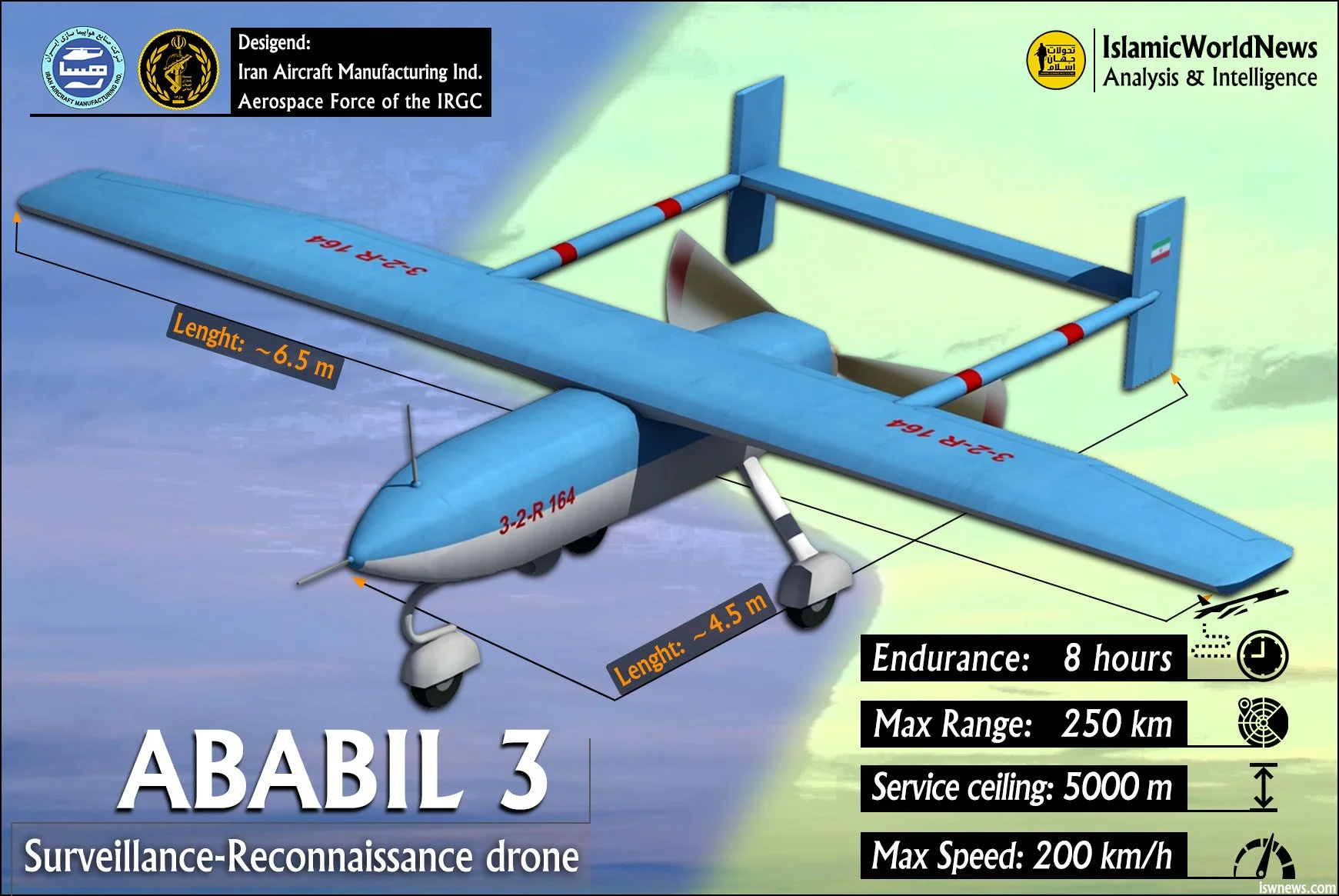
Ababil 3 Capabilities and Limitations | Islamic World News (Translated from Iran)

Surah Al-Fil (105:30) | Quran |
Iranian drone makers, titled their drones from inspiration in the Quran, which gives an indication for its usage on the battlefield. Ababil (Flock) is a reference to birds in the Quran that kept the Kaaba safe from Aksumite Elephants. These birds would drop small clay stones, scaring the elephants. The Ababil drone series was one of the first drones produced by Iran. While there were some reports of using Ababils as suicide drones, the first was a crude design, that had a fixed camera facing down. While this drone could take a series of aerial photographs, its limitation was that it had to be picked up by Iranian soldiers to develop the film and that it could not maneuver the camera.
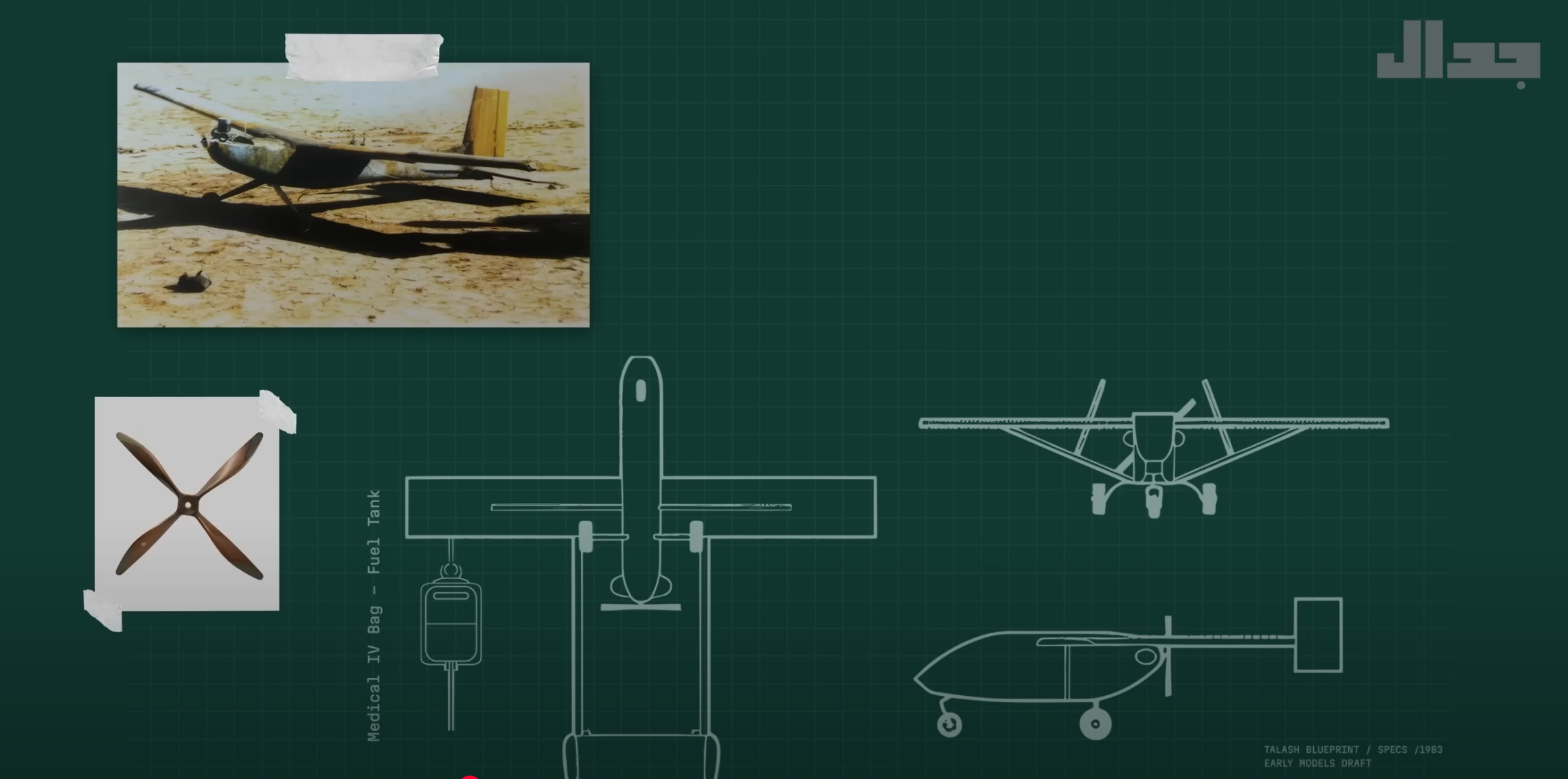
Graphic of Early Iranian Drone by Jedaal English | How Did Iran Become A Drone Superpower?

Sunan An-Nasa’ | Graphic Presented on Reddit
Shahed (Matyr) drones are created with one goal in mind. To land on a specific target and cause maximum damage. Usually, these suicide drones are sent with no intention of recovery or return; it is evident due to the lack of landing wheels on the drone. These suicide drones were designed for maximum damage to be sent at maximum distance. This allows the drone operator to safely guide the drone, with no apparent risk to the operator. Iran usually displays these drones at military drills, designed to inspire confidence in their consumers, that these drones will deliver as promised. These Shahed drones have been displayed to be launched from a civilian pickup truck and cargo containers. In analyzing open-source video footage, it is apparent that Iran designed these Shahed drones to be launched from any location that can house a cargo container or pickup truck. Perfect to conceal against a superior adversary that has aerial and space capabilities.
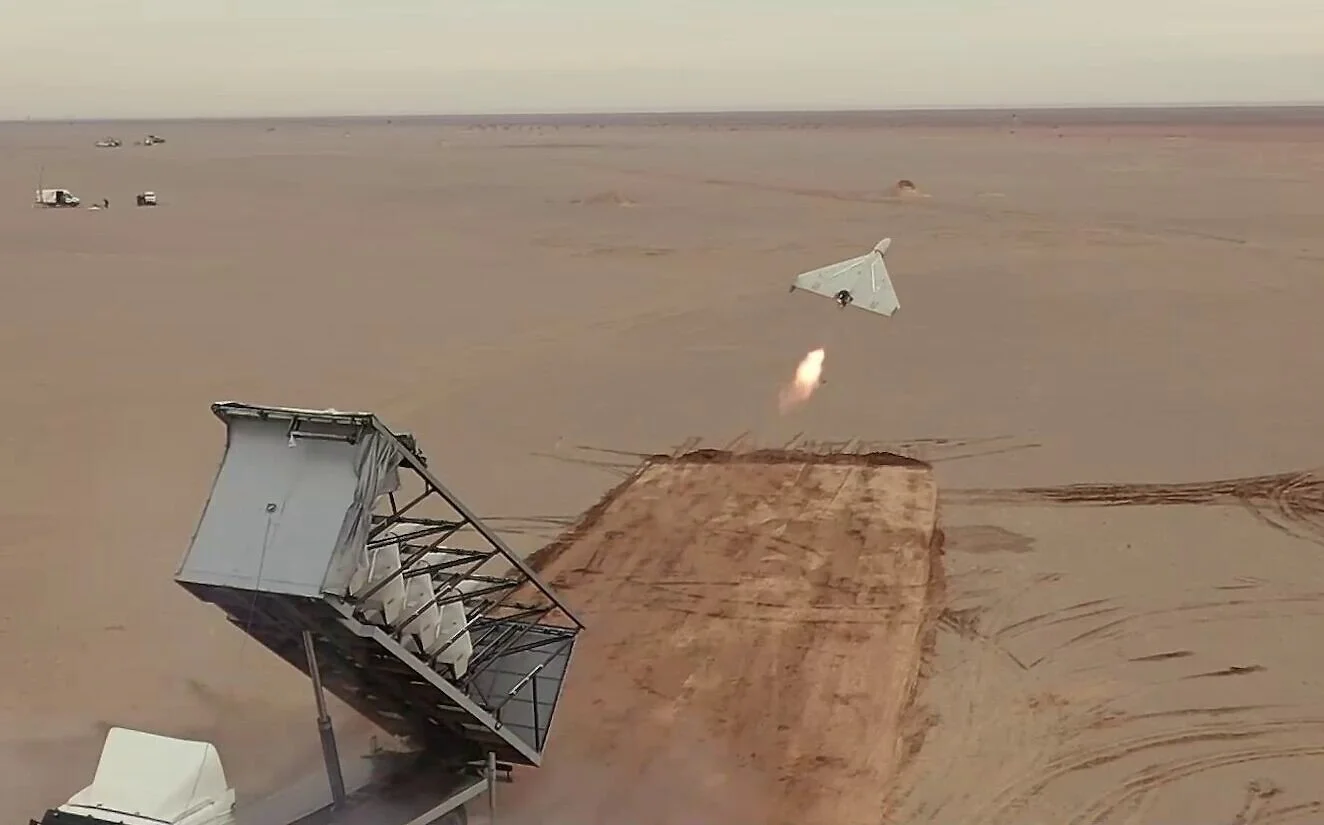
Shahed 136’s Launched from a Cargo Container | The Times of Israel
Following Russia’s military operation in Ukraine, the Russians began to rely on these drones to inflict massive psychological damage. In recent reporting, these drones targeted densely populated Ukrainian targets, aimed at inflicting casualties. The horrific beauty of drone warfare is that it can also deliver psychological damage. The motor at the back of the Shahed 136 has a distinct sound to it. Most video footage released by civilians on social media recorded the haunting buzzing sound, warning civilians in the area that a drone was en route to kill them. While Russia received these Shaheds from Iran, they upgraded them significantly to move faster and louder. While the initial Shahed 136 is shown to have a rear propeller, the Russians modified it to be a jet-powered drone.
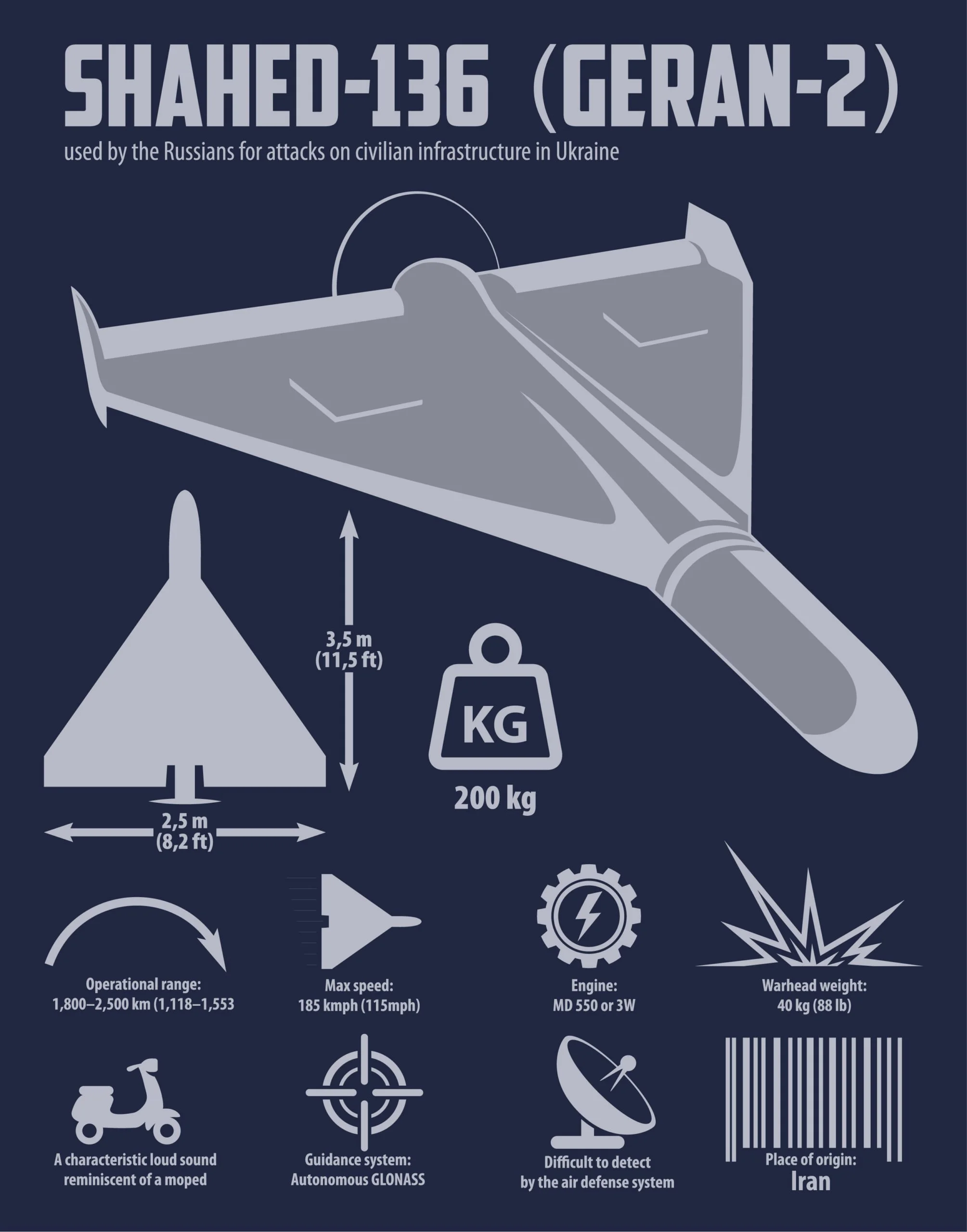
Geran 2 Graphic | Historynet
Why is Russia relying on these modified drones to deliver attacks on civilian infrastructure? The biggest hint lies in it’s operational range. While Russian casualties are escalating on the frontlines of combat, drone operators can launch these Geran 2 drones from a safe distance away from Ukranian artillery or airstrikes. To date, the Ukranian War is the most significant casualty-producing war that the Russian federation has experienced, and drones might be the answer in helping to alleviate the numbers. However, these drones allow Russia to threaten other nearby countries and Ukranian positions, while completely safe from counter-battery fire. As the Ukranian war rages on, the number of drone attacks by Russia skyrocketed, revealing Russia’s eagerness to break the civilian population, in hopes of ending one of its biggest casualty producing war. If this war continues, Russia will find itself in a difficult positions and might not be able to negotiate out of this war.
Russian dependence on Iranian designed Shahed drones reveals the limits of its industrial base. Initially designed for battlefield innovation, it is now a symbol of strategic vulnerability. This is the result of sanctions, shortages and the inability to sustain modern warfare. While the Geran 2 (Shahed 136) can allow Moscow to attack vulnerable Ukrainian position and threaten NATO, it cannot compensate for significant systematic weaknesses. Each drone strike exposes Russian reliance on foreign partners to fight a war it cannot sustain on its own.
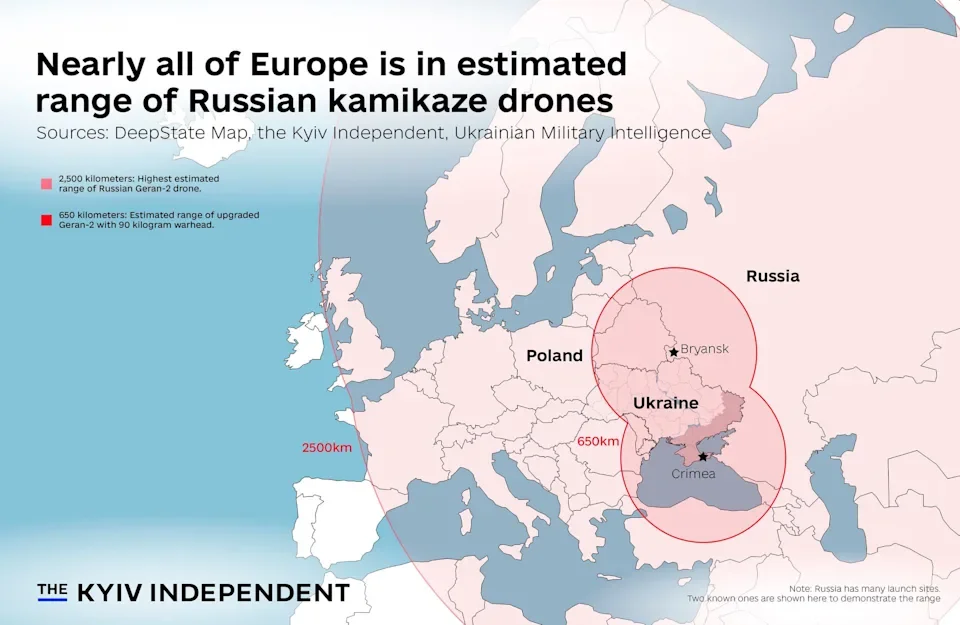
Ranges of the Geran 2 | Kyiv Independent
